At first glance, Stellar Track seems like a minor VCS release, and it is – as a Sears exclusive that requires the instruction manual to learn to play, it’s hardly the first game people talk about when bringing up the all-time classics on the platform. But what makes Stellar Track interesting is that the game itself is just a single part of a much broader history of games and popular media, a link in a greater tapestry. This is the story about the early days of fandom, a struggling science fiction TV show, and working within strict limitations to produce one of the most widespread computer games ever made. This is the story of Star Trek.
To set the stage for the VCS cart, it’s imperative to explain the history of its progenitor. Stellar Track is one of countless conversions of a 1971 computer game written originally by high schooler Mike Mayfield, called Star Trek. Mayfield in turn got the premise from the American television series by the same name. Star Trek, the TV series, is without question one of the most influential pieces of media to come out of the 20th century. It was certainly not the first science fiction television series, and initially it wasn’t even one of the most popular, but it was ambitious. Star Trek follows the adventures of the starship Enterprise and its crew in the 23rd century, and at first glance this doesn’t sound dissimilar from the kinds of pulpy space adventures that had been popular since the 1930s. But Star Trek married its action with some thoughtful scripts tackling current-day problems from writers like D.C. Fontana, Jerome Bixby and Harlan Ellison, and found other ways to be transgressive for 1960s American television. This includes the diversity of its casting, as the show took the unusual step for the time of casting Nichelle Nichols, a Black woman, and George Takei, a Japanese-American man, as main characters with their own agency and interests. The alien character Spock, intentionally or not, became both a sex symbol and a stand-in for the struggles that multiracial children can face, as well as the limits of considering everything strictly with logic. In the second season a Russian character played by Walter Koenig was introduced, another unusual decision at the height of the Cold War, showing that even old enemies can become friends in this utopian future. Rather than regularly blasting their way out of problems, the Enterprise crew would do its best to come up with minimally violent, thoughtful solutions to the dilemmas they routinely faced, often speaking in positive terms about diversity and consent, the dangers of fascism, and the futility of war. Despite poor ratings, this earned the show an unusually loyal fanbase that in turn started to build itself into one of the earliest versions of what we recognize today as media fandom. Fandom for specific genres such as science fiction and certain book series like the Sherlock Holmes stories or J.R.R. Tolkien’s Lord of the Rings were not new, but Star Trek was one of the earliest targets of fandom around a singular piece of visual media, and this intense devotion defined its audience not long after it started airing.
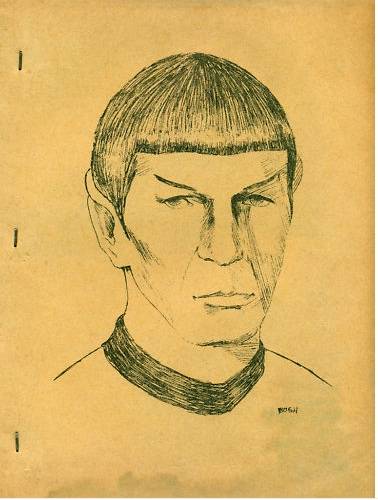
Star Trek fan Bjo Trimble famously started a letter writing campaign that saved the series and got it a third and final season, but even beyond that, Star Trek’s fans – which were predominantly women – created fanzines and newsletters that served as an outlet for poetry, fanfiction, fanart and articles. Fans also held get-togethers throughout the show’s initial run, culminating in 1969 with the first sizable Star Trek-specific convention held in Newark, New Jersey. Three years later that was in turn followed by Star Trek Lives in New York as the first such convention with actual guests. By this point Star Trek was finally finding an audience; the show’s third season gave it enough episodes to qualify for a syndication package, and the show’s reruns almost immediately found a bigger audience than it ever did while airing initially. Star Trek’s popularity resulted in a number of novelizations and books, a two-season animated revival, and plans for a new live-action show that would morph into the first Star Trek movie following the success of Star Wars. More broadly, the show permeating pop culture had an impact on getting people more interested in science and engineering, even leading to NASA christening its prototype space shuttle Enterprise and inviting the TV show’s actors to attend an early glide test. It’s no surprise, therefore, that Star Trek would also be of interest in the gaming space; the third major arcade video game publisher For-Play advertised an unlicensed clone of Nutting Associates’ Computer Space called Star Trek in 1972, and in 1979 the Star Trek license wound up with Milton Bradley, which released its Phaser Strike game that went out alongside its Microvision handheld game system. Sega picked up the Star Trek license for their 1983 arcade game and subsequent home conversions, and GCE had it for its own Star Trek game on the Vectrex.
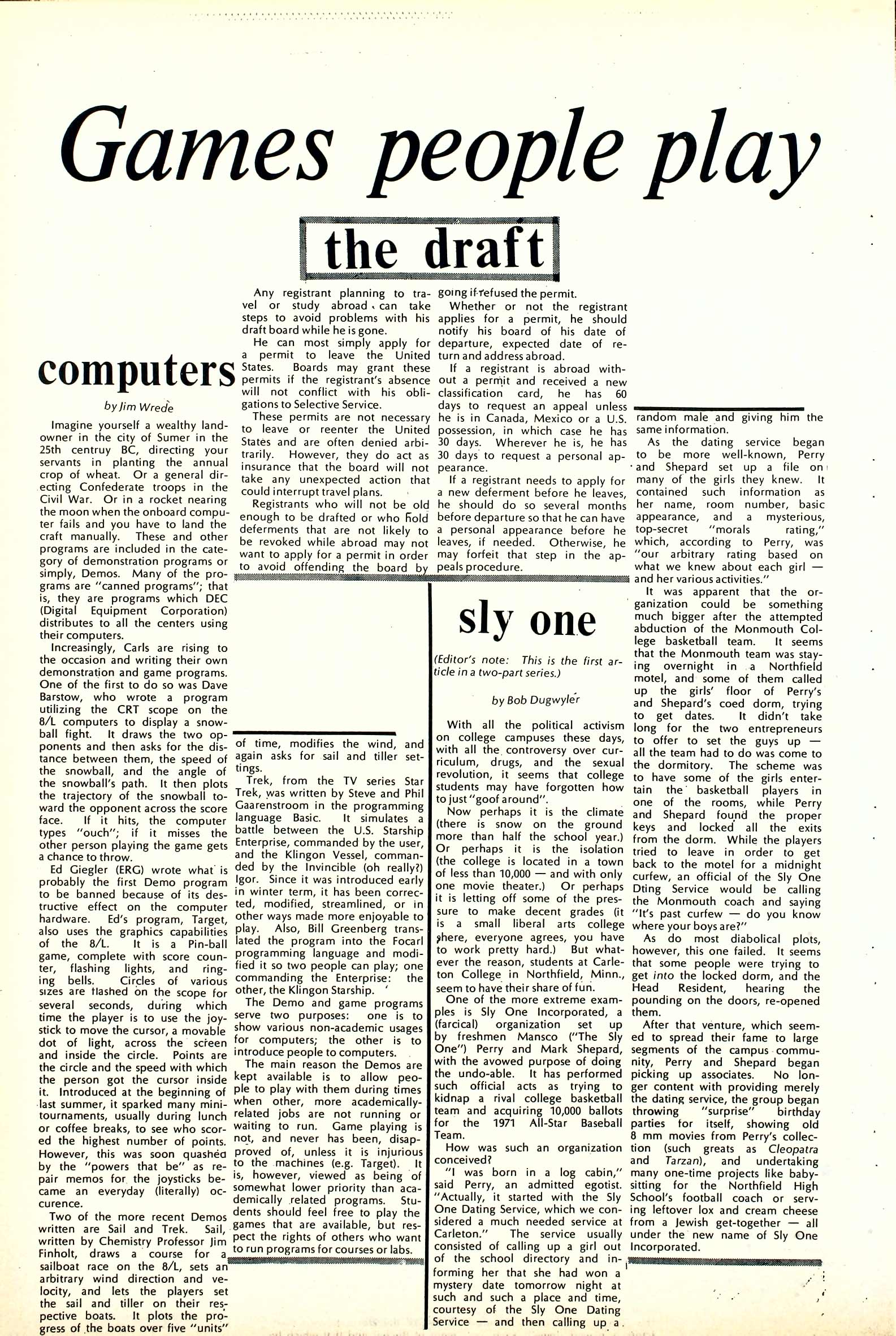
But, as with early conventions, zines, and costumes, Star Trek fan games preceded anything officially licensed. These started popping up as the BASIC computer language and the concept of timeshared computers were spreading across the United States. Starting at Dartmouth College in 1964 with its Dartmouth Time Sharing System and the companion BASIC language, this push to make computing more accessible by using multiple terminals to link to central mainframes simultaneously allowed computer access and education in universities and schools both public and private. Not every school system had time-shared computer access, but those that did generally gave students and faculty a lot of leeway to write and share programs and games, and running preexisting games from program libraries weren’t unheard of either. And with Star Trek appealing to a crowd of people primed to be interested in science and computing, it’s unsurprising that several of these popped up in the late 60s and into the early 70s. Creative Computing’s David Ahl remembered playing two such games at Carnegie-Mellon and UC Berkeley in the late 1960s, for example, another was reported on in Minnesota’s Carleton College student paper in 1971 that pit players against a Klingon ship commanded by the “Invincible Igor,” who was controlled either by a computer or by a second player. Armed confrontations with the Klingon Empire, a rival power from the TV series, really permeate many of these early fan games, ironically given the show’s general push away from out-and-out slugfests and violence, but Star Trek has always struggled squaring that with a general desire for action in video games.
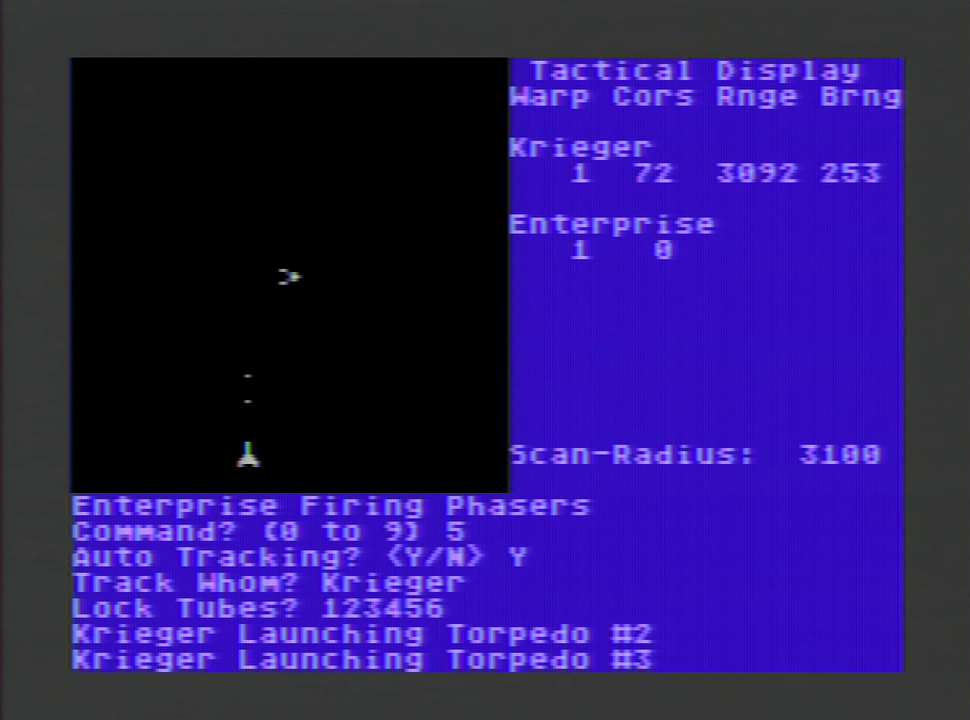
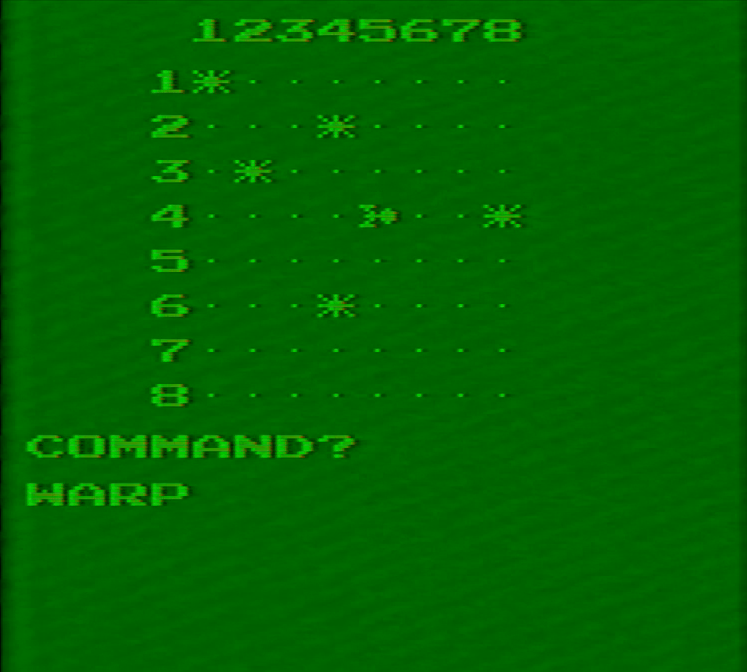
A few other early fan games followed suit with tactical confrontations with what was usually a Klingon ship. Another 1971 game, BASTREK, was written by Bill Peterson and gave your battle a more narrative structure, with somewhat randomized events, dialogue with the Enterprise crew, and different pathways to victory. This was modified the following year by Don Daglow, and this version became somewhat widespread through the decade. More obscure is tactical Star Trek game, STARTKS, written by Col. William Luebbert of the US Military Academy at West Point in 1972-1973 where players face off against, once again, a Klingon cruiser; this was shared with Minnesota’s MECC timesharing network and backed up by Ralph Hopkins in 1977 but doesn’t appear to have really spread very far in its day. As such, it is overshadowed by another tactical game known as Trek73, written by William Char, Perry Lee and Dan Gee at City College of San Francisco. Trek73 had some narrative elements, but was largely focused on maneuvering your ship around as you battle a Klingon ship. This one was popular enough to even find its way onto later microcomputers, such as the Atari 400 and 800.
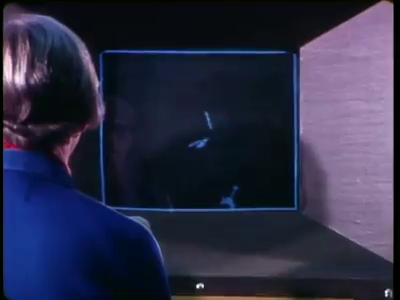
Perhaps the most ambitious of these other fan works came from Dave Needle of Amiga fame and his associates Stan Shepherd and Bob Ewell, who built a Star Trek-themed arcade machine that was located at The Federation Trading Post storefront in Berkeley, California. Placed on location around 1977, this was a Spacewar! style fight between the Enterprise and a Klingon cruiser. Each ship had a shield protecting it from torpedo and phaser fire, and hitting a specific section of shield enough times would cause it to fail, leaving a gap that, if fired into, would destroy the vessel. Randomly a Romulan bird of prey would decloak and fire a plasma torpedo at one of the players, and it was entirely possible to attack it as well. At the conclusion of the match, the titular Doomsday Machine from the episode of the same name would come out and devour the loser. When the Federation Trading Post closed its doors, this game was pulled and seemingly no longer exists; that said, it led to Needle and his companions to work with Midway on Space Encounters, a game based loosely on the Death Star trench run from Star Wars. Video footage does exist of this machine in action, though; documentarian Tom Wyrsch posted an unused clip of the game for his documentary Back to Space-Con on Facebook in 2018 but it’s a little fuzzier where he pulled it from initially.
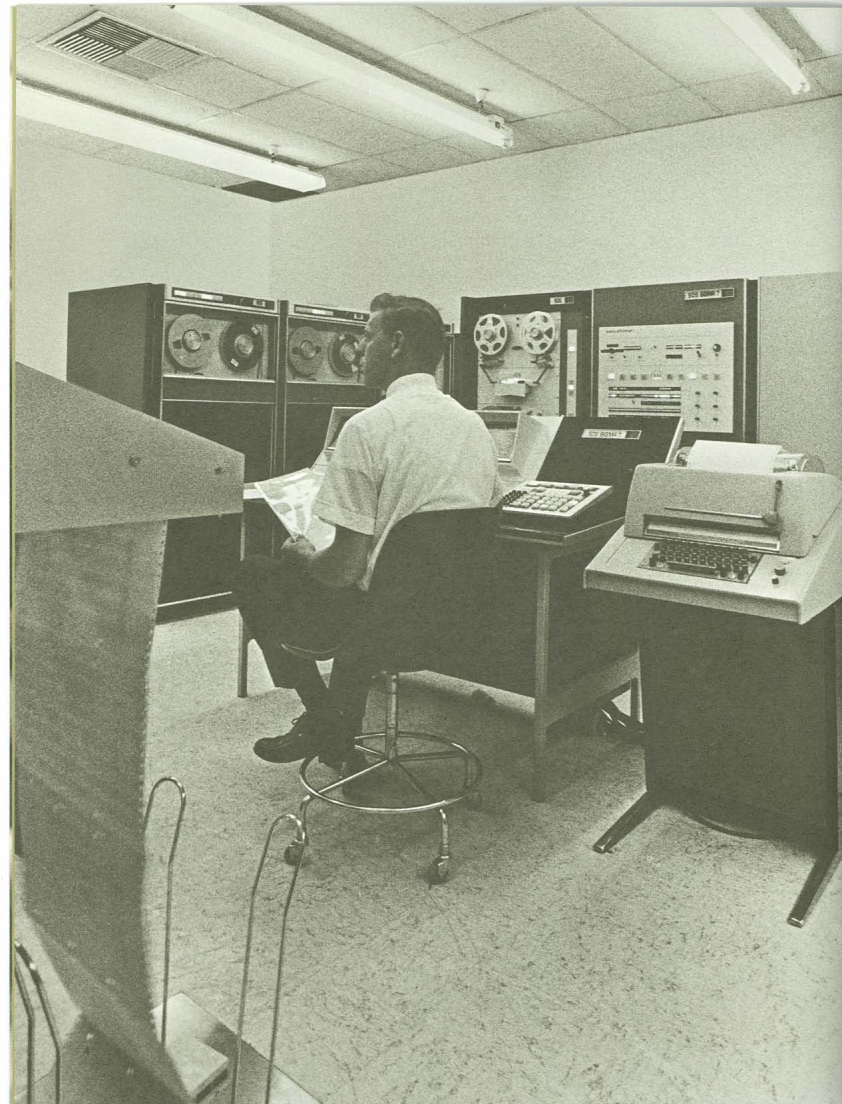
But you have to travel back to 1971 to find the unlikely beginnings of what wound up the most prolific of all these fan games, a personal project by high school student Mike Mayfield. At the time, Mayfield was a high school senior living in Villa Park, near Irvine, California. According to interviews with myself and historian Ethan Johnson, he picked up a copy of John Kemeny and Thomas Kurtz’s 1967 book BASIC Programming on a road trip around 1970, despite having no computer access at the time, simply reading it and thinking about the possibilities of programming. His opportunity came in 1971 before graduating high school; at the time he had a Sears motorbike that allowed him to drive to the UC Irvine campus about 20 miles away, which had a computer lab. This lab was only open to students and staff at the school, but Mayfield managed to get access by stealing a time-share user account; as he explained it, every student enrolled in a computer class had an initial log in, and after doing so they could set up their password. He’d wait a couple weeks and check to see which students had never shown up (having dropped the class to some degree or another) and just swipe their log-in account. This allowed him to use the school’s SDS Sigma-7 and DEC PDP-10 computers, though his credentials being for a time-share account really only let him program for the former. That was where he discovered the seminal 1962 computer game Spacewar! running on the PDP’s vector graphics monitor, as well as a version of the 1969 text–based Lunar Landing Game. As an avid Star Trek viewer in these early days of its syndicated run (he described he and his friends as being enamored with the show and Mr. Spock), these got him interested in making his own space combat game. There was a big problem to do that, though: the stolen user account he was using as a high schooler only gave him access to the Sigma 7’s ASR-33 teletype terminal. If you’re unfamiliar, a teletype is essentially a keyboard, monitor, and printer all in one unit; the user would type in commands, and the computer’s response would be printed out on a ream of paper. These were the most common and cost-effective way to get input and output out of a time-shared computer system through the 1960s and well into the 70s, even as they slowly started being supplemented by terminals using video monitors instead. But for obvious reasons, a teletype system is not conducive to a fast-paced game like Spacewar! that used a real-time, active monitor.
Rather than give up, Mayfield got together with three of his friends and brainstormed ideas on how to make their own space combat game within the limitations of the teletype and his burgeoning knowledge of BASIC. While most of their ideas weren’t workable, a few ideas stuck: having a galaxy map and smaller sector maps that the player could travel around in an 8×8 grid, and phaser weapons that depleted your energy supplies as you used them. Mayfield started working on the game in earnest over that summer once he’d graduated high school, iterating on it bit by bit over the weeks. With no dedicated disk space allocated on the computer for himself due to the possibility that his stolen account would be revoked (which happened more than once, necessitating him to swipe other unused accounts from computer classes), he had to save the program on a paper tape each time he’d worked on it. The terminal also could only print around 10 characters a second, forcing him to keep the program small and limit feature creep from setting in just to ensure that a single game didn’t take entirely too long to play. Finally, since his BASIC Programming book was specifically about Dartmouth BASIC, he had to learn how to adjust its functions to the variation utilized by the Sigma-7. By the end of the summer, his first version of the Star Trek game was more-or-less complete, coming out to what he remembers as being about four or five pages of code.

Mayfield’s Star Trek puts players in the role of Captain James Kirk commanding the Enterprise. Hostilities have broken out between Kirk’s government, the United Federation of Planets, and (surprise!) the Klingon Empire. The Enterprise has been ordered to patrol a section of the galaxy divided in 64 quadrants – and yes, the term doesn’t make any sense in this context – that are in turn are subdivided into sectors, destroying all Klingon warships and protecting Federation outposts. In service to this task, players have to warp around the galaxy, scanning the quadrants to look for enemy ships, manage their energy and torpedo supplies, and resupply as necessary. The Enterprise can attack Klingons with their phaser banks, which always hit but use the ship’s finite energy supply and weaken with distance, or with photon torpedoes, which do massive damage regardless of distance but are a limited resource that can also miss their targets. The game is over when the Enterprise is destroyed, time runs out, or all the Klingon ships are destroyed.
Mayfield said that the idea of a galaxy map that shrunk into sectors wasn’t just him working around the limits of the Sigma 7 teletype. It was also his implementation of the Star Trek philosophy of exploration. The Enterprise would need to head into unknown space to see what’s there – whether that’s Klingons, friendly outposts, or just a bunch of stars. And while long-range sensors can tell you how many of each of those may exist in a quadrant, it’s not until you enter it yourself that you can really see things in detail.
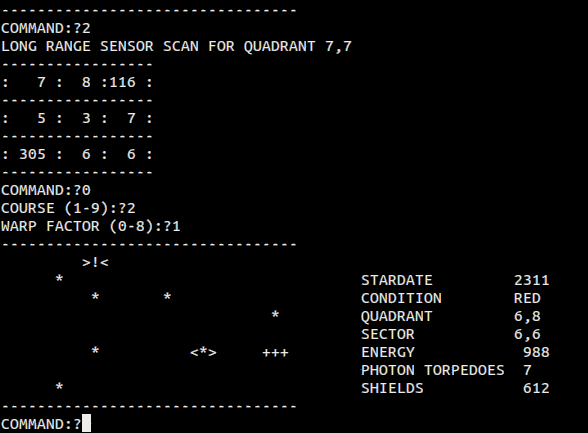
While Star Trek was popular among Mayfield and his friends, as well as the other users at the UC Irvine computer lab who tried it out and asked for copies of the finished game, it’s likely that it would have been forgotten if not for a serendipitous decision by Mayfield to purchase the Hewlett Packard HP-35 calculator, which began shipping in January 1972. Mayfield mentioned to the people at the sales office in Santa Ana that he’d created a Star Trek game for the Sigma-7 in BASIC, and they asked if he could convert it to the HP BASIC version used on their computers, notably the new HP2000C timesharing system, so they could play and use it for their software library. Given that his original code was both messy and largely incompatible, Mayfield essentially rewrote the entire game, finishing it in October 1972 with a final revision making its way to the HP public domain program library around February 1973. Between HP2000 timeshare computers being a relatively affordable minicomputer option, HP’s BASIC variant being a prevalent computer language on them, and Star Trek quickly growing in popularity in general by that time, Mayfield’s game started to spread quickly. Shortly after the original’s appearance on the HP program library, independent variations started appearing at universities in Philadelphia, Texas, California, and more. In the code itself, Mayfield credited it to Centerline Engineering – a name he’d come up with in case he ever started his own company.
Being a part of the HP software library would have ensured that Mayfield’s work would have been reasonably well remembered on its own. But what really made Star Trek spread outside the HP ecosystem into a globally played and renowned game was when then-DEC employee David Ahl came across the game. Ahl said somebody – likely a fan of the game, as Mayfield said he’d never interacted with Ahl – submitted it to the Digital Equipment Computer Users Society, or DECUS. Ahl worked with three others – Mary Cole, Ira Potel and Leo Laverdure – to modify the HP 2000 BASIC program to RSTS-11 BASIC, which DEC’s computers used. Ahl noted that at the time HP and DEC practically dominated the education market for computers, meaning anyone at a school or university that had a computer probably had access to one version or another of Star Trek. Furthermore, when Ahl published his first edition of the book 101 BASIC Computer Games in 1973, he included Star Trek under the name SPACWR – for copyright reasons, he explained, though the subheading for the listing makes it clear that this is based on the TV show. This first edition of the book sold 10,000 copies, spreading Star Trek far and wide among anyone with access to a computer. One person who notably got a copy of this book was Bob Leedom, who factored into the game’s further refinement and spread.
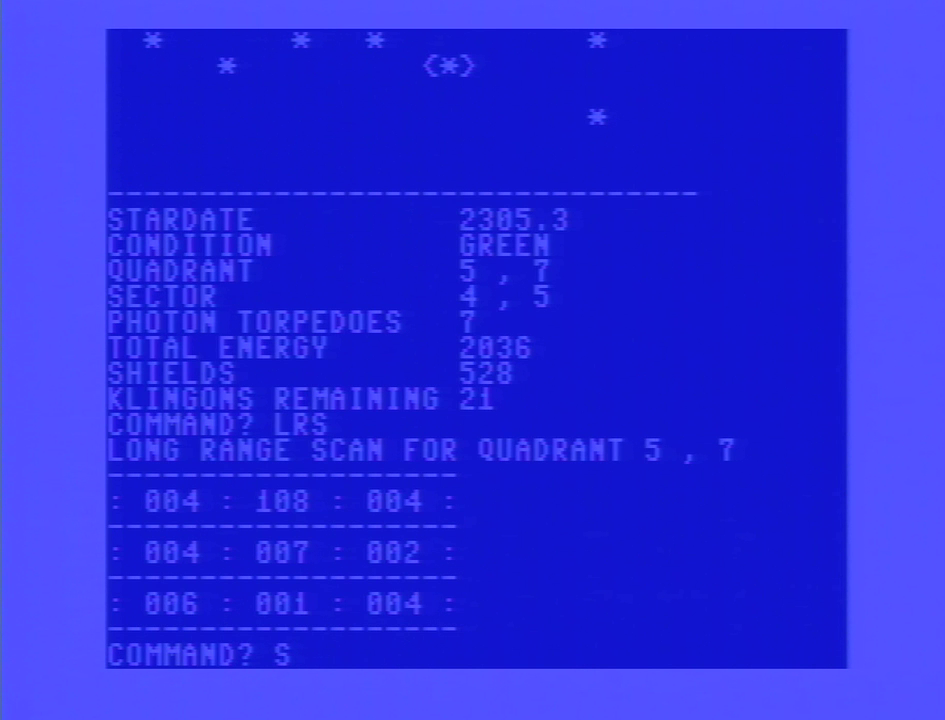
Leedom explained to me that he was a radar systems engineer at Westinghouse and had access to a Data General Nova 800 when he got a hold of Ahl’s first edition book. Westinghouse allowed staff to use the Nova after hours to make their own programs or do whatever else they felt like with it, and was becoming familiar with the broader world of computer programs as a subscriber to People’s Computer Company – a periodical published by a computer store by the same name by noted BASIC evangelist Bob Albrecht. With Ahl’s collection of games in book form, Leedom went through converting them to the Nova 800 form of BASIC, and as a big Star Trek fan since the show debuted, he was immediately interested in Mayfield’s game. He said that he found it to be one of the best games in the collection, but he and his engineer buddies wanted to add some quality of life changes to the game. While at this point Leedom doesn’t quite remember which ideas were his and which came from his group of friends throwing out suggestions, Leedom’s rendition, dubbed Super Star Trek, includes several changes that would find their way into quite a few future versions of the game. For example, Leedom felt that the original’s method of requiring players to memorize specific numbers for the commands was cumbersome, and so added in text shorthand for commands that were more intuitive. Klingon ships would now move around, and status reports would come from named members of the Enterprise crew. The quadrant misnomer was dropped with each region of space now named after star systems or constellations. Proud of his changes, Leedom wrote a letter to People’s Computer Company about his updated game, which was published and then spotted by Ahl, who at that point had left DEC and was publishing the magazine Creative Computing. Ahl contacted Leedom, got a copy of Super Star Trek and had its code published in through his magazine (marking the second major fork of the game); moreover, when Ahl left DEC in 1974 he got permission to take 101 BASIC Computer Games with him, with the minor change of removing the 101 from the title and the major change of redoing all the programs within it for Microsoft BASIC. It was during this period of time that Ahl met Gene Roddenberry himself, who in turn got Paramount Pictures to agree to let Ahl use the official Star Trek name in the second edition of the book, free of charge. When Ahl published this second edition of BASIC Computer Games in 1978 – right as the home microcomputer market was starting to take off, with each machine featuring its own take on BASIC – Leedom’s Super Star Trek was the centerpiece at the right time. This was coincidentally right after Star Wars had hit theaters in 1977 and when the revival TV series Star Trek: Phase Two was being turned into The Motion Picture on the strength of continued original series reruns, so space-themed games were in the zeitgeist.
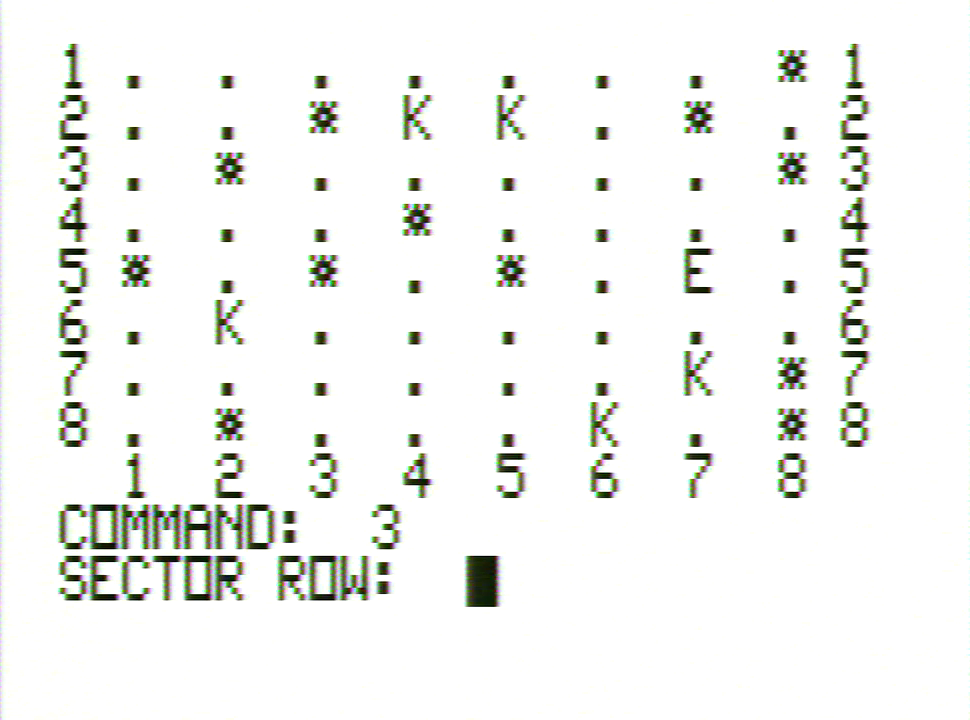
The third major fork of Star Trek arrived in 1976. In the July 1976 edition of People’s Computer Company, the newsletter published two works by engineer Li-Chen Wang: Palo Alto TinyBASIC, a version of BASIC stripped down to fit in small, restrictive computer systems (such as the Altair 8800 and other early hobbyist computers) and, along with it, Tiny Trek. Tiny Trek was a TinyBASIC version of the game, reducing your command list to only three options but retaining the core play loop. And much as with Mayfield and Leedom’s games, Wang’s take found conversions and adaptations to other memory-starved platforms over the years.
Between Ahl’s books, type-in listings in enthusiast magazines and the program libraries from HP and DEC, the stage was set for Star Trek to pop up on practically every computer platform. Accordingly, it spread far and wide. Including offshoots of Mayfield, Leedom and Wang’s variants, the game can be found on practically every single computer platform that was in use during the 1970s and 80s across the parts of the globe with access to these still niche machines, with multiple people writing into newsletters and magazines about their versions for everything from the PDP-8 and Altair 8800 to the Commodore 64 and Cosmac VIP.
It even spread to the non-English-speaking world. In an article published in the Japanese computer magazine Oh! MZ in September 1984, the author Junji Minegishi describes the history of the Star Trek game in Japan, where the TV show had started broadcasting in 1969 and similarly found a niche fanbase there. The game was first discovered by Haruhisa Ishida, who encountered it at the US-based Bell Labs in 1975. Inspired by Mayfield and Leedom’s versions, and particularly by Wang’s Tiny Trek, Ishida created Microtrek, which would get ported around to Japanese computers, such as the PC-8001, MSX, and the Sharp MZ line, after he took a position at Tokyo University the following year. It’s a little unclear exactly how far Star Trek spread in Japan, but all indications are that quite a few versions were floating around by the time that article was printed. A version of Tiny Trek even found its way to Nintendo’s Famicom through the Family BASIC cartridge under the name Mini Trek, ensuring the game showed up on the most popular gaming platform in Japan in the 1980s.
On the home console front, Stellar Track is preceded by several versions of Star Trek that made their way to the Bally Professional Arcade through its BASIC cartridges. Of the six or so we know of, a couple were published as type-in programs in newsletters, some were sold on cassette tape, and still others were just homemade renditions that didn’t get much spread, but regardless of where they originated, many of these are still extant and preserved today. These games seem to be sourced from a few different takes on the game; for example, the earliest; an unpublished variant likely by Brett Bilbrey, is an attempt to directly convert the 101 BASIC Computer Games listing, as is a May 1979 version by Scot Waldinger. Another pair of games – the March 1979 Bally Trek and the 1980 Microtrek – both stem from the Wang version for TinyBASIC, and are stripped down programs with only one weapon system and a warp function that automatically jumps you to the next area with enemy ships. Microtrek incidentally shares the name of Ishida’s game, and reportedly is a take on a game shared around by the TRS-80 user group out of North Carolina – though there is little to determine if it has any connection to the Japanese version beyond being adapted from Tiny Trek. Another author, Mark Keller, wrote a now-lost conversion of Super Star Trek in early 1980 before revisiting and revising it for Star Trek III the following year, ostensibly adding in features from the more narrative-based Trek80 variant to produce possibly the best version of the game on the platform, if one prone to crashing. There are also a few games that take the concepts of Star Trek into new directions, taking advantage of the action-oriented Bally to produce more active programs. The Bally Arcade always straddles the line between a home console and an early microcomputer, and the number of Star Trek renditions made by users really drives that point home.
And finally, even though Star Trek and Super Star Trek were functionally public domain programs, some versions ended up as commercially sold software – with or without the official Star Trek license – on computers ranging from the Apple II and Atari 8-bit line to overseas units such as the British ZX Spectrum and Japanese PC-88. It’s this commercial grouping that this Sears-exclusive cartridge, Stellar Track for the VCS, falls into.
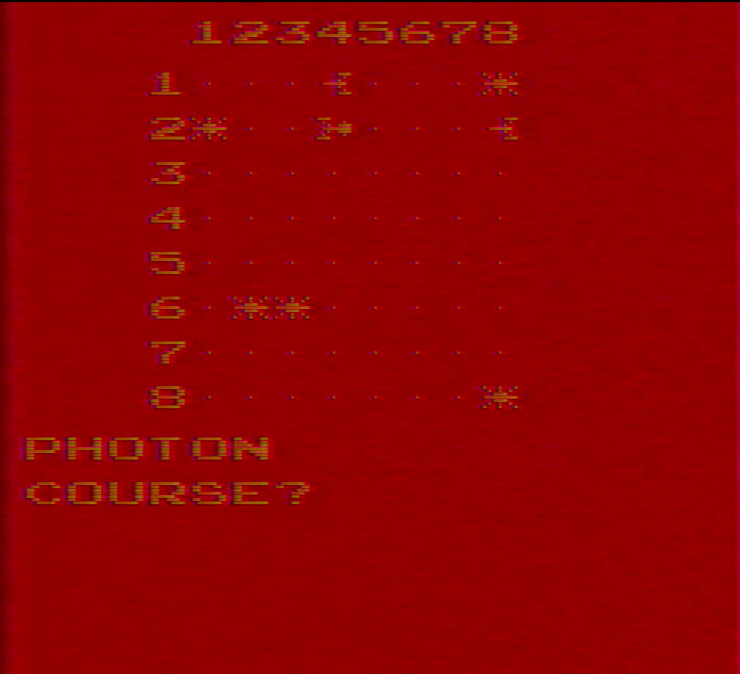
Stellar Track comes to us from Rob Zdybel, and is his first VCS game to be published. Zdybel was a former chemistry major who fell in love with computers in college, changing his major and never looking back. His first couple jobs in the industry involved working for the US government, which is when he first discovered and enjoyed the Mayfield Star Trek game while working with NASA. With this background, when he finished school in 1979 his first job offer was to help design software to make missiles more accurate. Deciding that he wasn’t a fan of a job that was about killing people more efficiently, he opted to go into video games instead. He ended up taking a job with Atari after they offered him a free Atari 800 computer for signing on; Zdybel was a big proponent of the 800, its architecture and ease of use, but since there were no openings at the time for an Atari computer developer, he found himself making VCS games instead – a platform he found to be much more limited and less interesting. At the time he started working at Atari there were few restrictions on what developers could make – essentially whatever the game dev thought would be fun, they could work on. With no bonus programs or recognition of any sort, he wasn’t all that worried as to whether or not Star Trek would sell on the VCS. Zdybel has noted in our interview and in his convention appearances that he pretty much would take the entire month of December to stop working on his main projects and instead developing Atari 800 programs for his own enjoyment instead, including a version of Trek73 called Tactrek that Atari would eventually republish itself in the Atari Program Exchange. And unsurprisingly, Star Trek became his first VCS game as well.
The VCS is a weird fit for Star Trek, and Zdybel describes it a technical challenge and tour de force. He recognized there were few strategy games on the VCS, and with no one to stop him, as he put it, he decided to attempt the conversion. One major problem that had to be overcome for the VCS is that the system has no native text display mode. Zdybel had access to the same static character display kernel that Warren Robinett used in BASIC Programming, and much like that program a large chunk of the system’s memory went towards maintaining the screen. While the game probably could have used the keypad controllers, this would have limited its audience dramatically, so Zdybel put together an interface that used the standard joystick. More vexing was the need for the game to generate random galaxy maps and locations. While the VCS has a built in counter that could normally be used for a random number generator, Zdybel said that for whatever reason no matter what seed he put in, this counter would produce one of three maps. As such he had to write his own random number generator code to get that aspect to work correctly. The VCS game also reduces the size of the galactic map from an 8×8 grid to a 6×6 one, as that was all the kernel he’d used could display.
Despite the VCS being a strange platform to host the game, Zdybel did an admirable job with this conversion. The joystick allows the player to flip through the various menu options along the lines of Super Star Trek: short range scans that show your current sector map, long range scans that tell you the number of aliens and starbases in the surrounding quadrants, the galactic map that shows you everywhere you’ve been, the warp function that allows you to move by selecting a course from one of 8 directions and then the number of quadrants and sectors to jump, a status menu showing you the time remaining and your ship’s current condition, and both your phasers and photon torpedoes. At the start of every game the cartridge will generate a random map with varying amounts of aliens to destroy and time to do it in; the manual recommends that beginners reset the game until you end up with between 25 to 35 aliens and as much time as you can get. The difficulty switches will adjust whether or not the alien weapons are as powerful as yours, and how likely you are to receive system damage. If a system is damaged it can’t be used until the necessary amount of time passes to repair it or unless you dock at a starbase, of which two will be randomly placed in the galaxy; if engines are damaged you need to enter the equivalent number of stardates needed to fix them as your warp factor, which will cost time and energy. And time really is the most precious resource here. Warping between quadrants is the only action that will use stardates – one for each quadrant jumped – but it means that you need to be very strategic in how you approach your path through the galaxy. You also need to ensure your course out of a quadrant is clear, since trying to warp with a star in your path will cost you all that time but get you nowhere. Thankfully, moving within a sector doesn’t use very much energy and no time, but it is still very easy to run out the clock and lose the game.
Combat is pretty straightforward in this version of Star Trek as well. Each alien ship has 99 units of energy that you must deplete before its destroyed. Much like Mayfield’s original game, phasers will target all enemy ships in a sector, divided among the total amount of energy the player chooses to expend on the attack. The closer the alien ships are to your starship, the more damage the phasers will do. Photon torpedoes, by contrast, are a limited resource that can only be fired one at a time, and even then can only be fired along one of 8 possible directions. With this said, torpedoes will instantly destroy an alien ship, so it can be worth maneuvering into a position where you can fire one. But any action the player takes in a combat zone aside from checking the galaxy map or the ship status will give the alien ships an opportunity to fire on you. This even includes doing the short range scan to even figure out where they are in the sector you just warped into in the first place. So much like warping between quadrants, it’s important for the player to carefully judge their actions to lose as little energy as possible in a fight. Now this said, docking at a starbase will replenish your energy and torpedo supply and involves little more than moving the ship on top of it, but if a starbase is out of your way it presents a dilemma on if it’s worth using the time to get there unless it’s an emergency. The game ends when all the aliens are destroyed, the player’s ship is destroyed, or if you run out of time; in any case the game then rates you based on your performance from cadet to admiral.
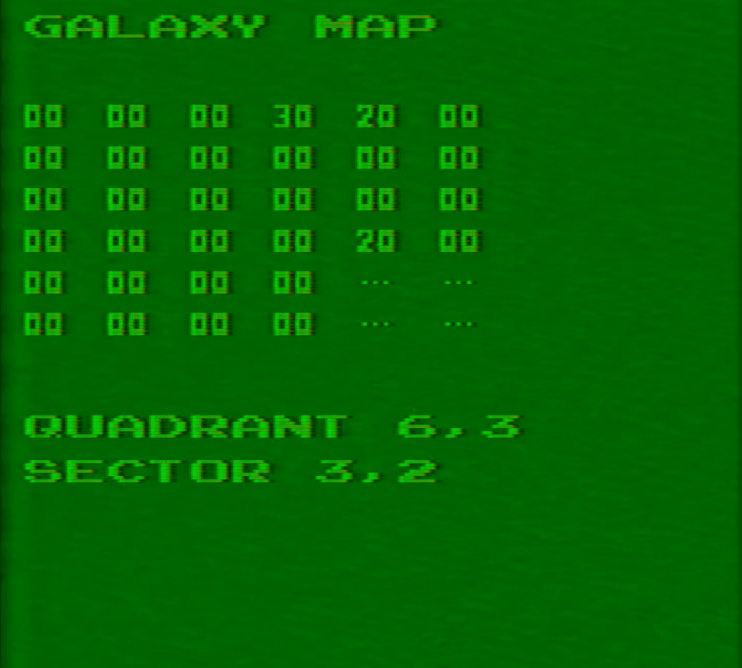
Overall Stellar Track does a really good job of bringing this computer game to a home video game console that frankly would have been the cheapest way to play it in 1981. Granted, at this point Star Trek was a decade-old program, but it’s still a fun game, and the randomly generated seeds provide as much replayability as any other version of the program has. The VCS doesn’t have a huge number of outright strategy games barring its supply of board game conversions, but this is a really good one. Much like the other versions there’s a little bit of randomness to your victories; success or failure can depend both on the seed you get to start with, where the alien ships and space stations end up being located, and whether or not you get hit with untimely system failures or damage. Particularly when the game is set to make system damage more likely, it’s incredibly easy to warp into a quadrant, get damaged as you scan your surroundings, and then find yourself without the phasers or photon torpedoes you need to finish off your enemies with the time you have available. At the same time, it’s so easy to get a new game going that death doesn’t seem all that severe a penalty. So even when the game is a little unfair, it still goes by quickly enough that you can hop right back in and give it another shot. In a modern context you could refer to this as a Roguelite type of game, but regardless of how you want to classify it, Stellar Track works.
While this game follows Championship Soccer and Steeplechase in having a backstory fleshing out the game in the instruction manual, it moves away from the MAD magazine-inspired goofiness from those titles in favor of a pulpy scifi setting. This spins a tale where Terrans trade science and art for alien warp technology, ultimately leading to tensions between the two sides. It’s all a tad flimsy, but given that your justification in the original Star Trek was little more than putting one ship up against a Klingon invasion fleet, it’s certainly as good a background as one could reasonably expect from a few paragraphs. The Star Wars-esque TIE Bombers in the manual art, on the other hand, may be notable as being the first time that franchise served as “inspiration” for a VCS game, though other games like Exidy’s Star Fire arcade machine or Cosmic Conflict on the Odyssey2 pull from that franchise’s visuals before Atari did.
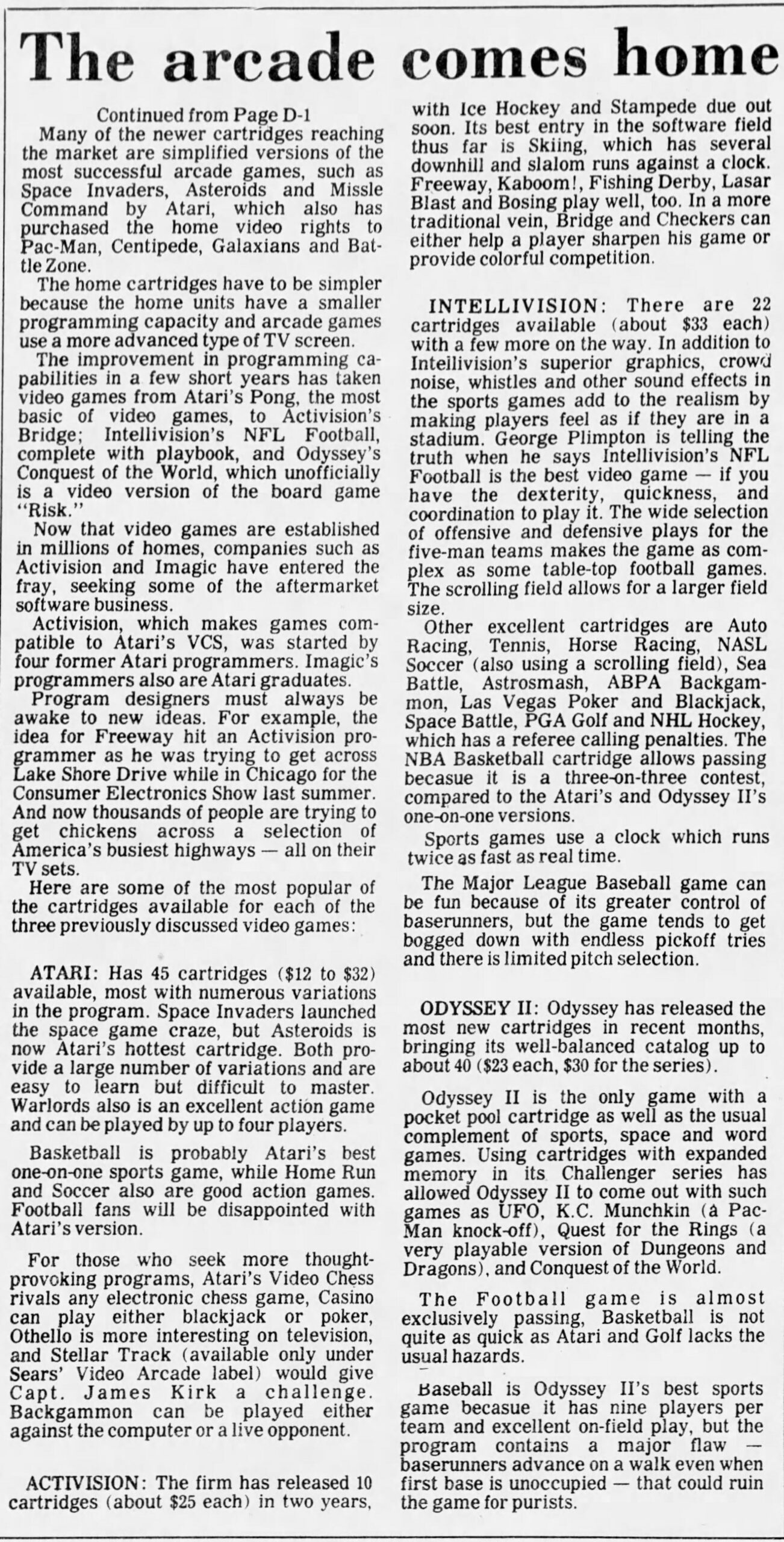
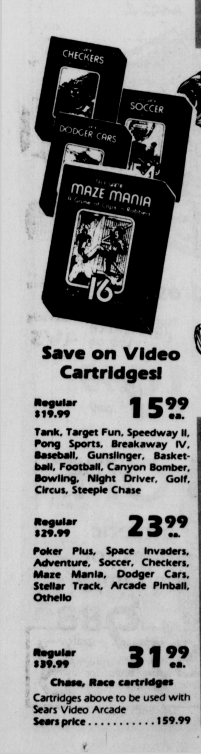
Being a Sears exclusive we don’t really have sales figures for Stellar Track, but the game did see a little bit of coverage in the press at the time and seemed to have gained some interest by virtue of being a space game in the early 80s. Analog from May 1981 remarked upon the game’s publication alongside Steeplechase, though it did not review the game itself. In the August 1982 edition of Space Gamer, reviewer Richard Edwards immediately identifies it as a conversion of the 70s Star Trek game, and writes that the joystick makes moving through the menus easy and the game retains the interest of the original. But he also points out that Star Trek itself was long in the tooth by 1982, and that paying full price for a VCS conversion is a hard sell – a recurring theme that will be touched on further momentarily. In December 1981 the Munster Times published a roundup of game software, and referred to Stellar Track as a game that would give Captain Kirk a challenge. Naturally, both it and Steeplechase show up in Atari’s contemporary catalogs, as well as in Sears’ own game advertising, so while it was not a huge release for the company it did still get some marketing boosts.
In all Stellar Track is something of a blip in the broader history of Star Trek, both in terms of the game and the broader franchise. While this is probably the most high-profile commercial release of the game, Zdybel said when he wrote it he assumed Atari would be willing to go after the Star Trek license so that the game could be sold under the name of the popular series. Obviously, that never happened, possibly because of the exclusivity deal with Sears. While he himself refers to the game as Star Trek, officially it only came out under its Sears title, Stellar Track, appearing admittedly like the store brand of the franchise that it is, right down to the Enterprise-esque ship on the box art. But most likely the biggest reason Stellar Track is so easily overlooked is Atari’s other game inspired by Mayfield’s Star Trek: Star Raiders.
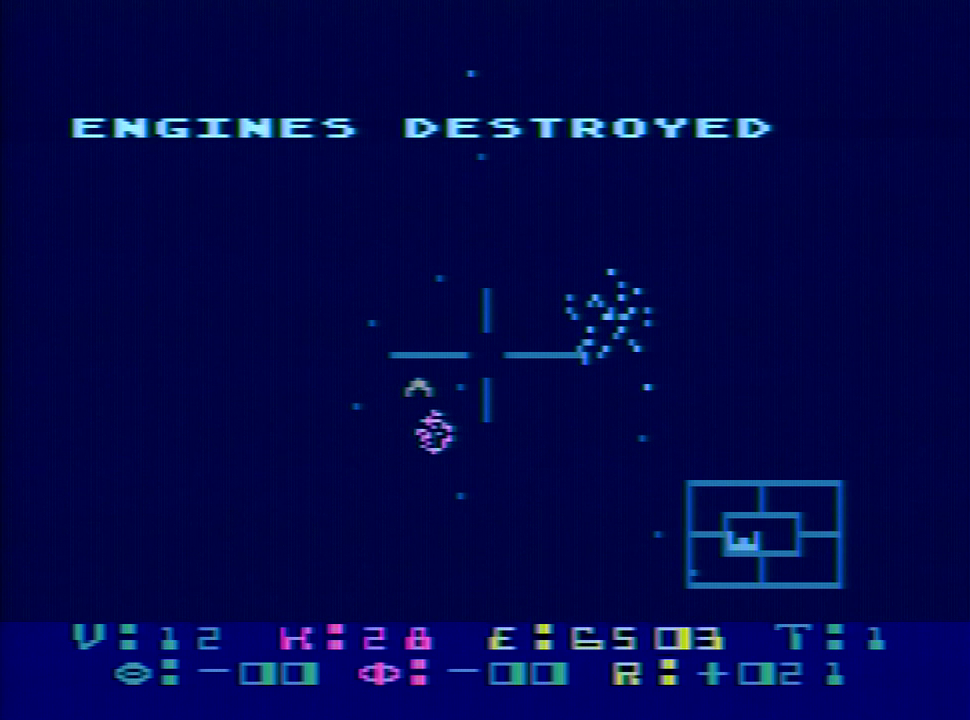
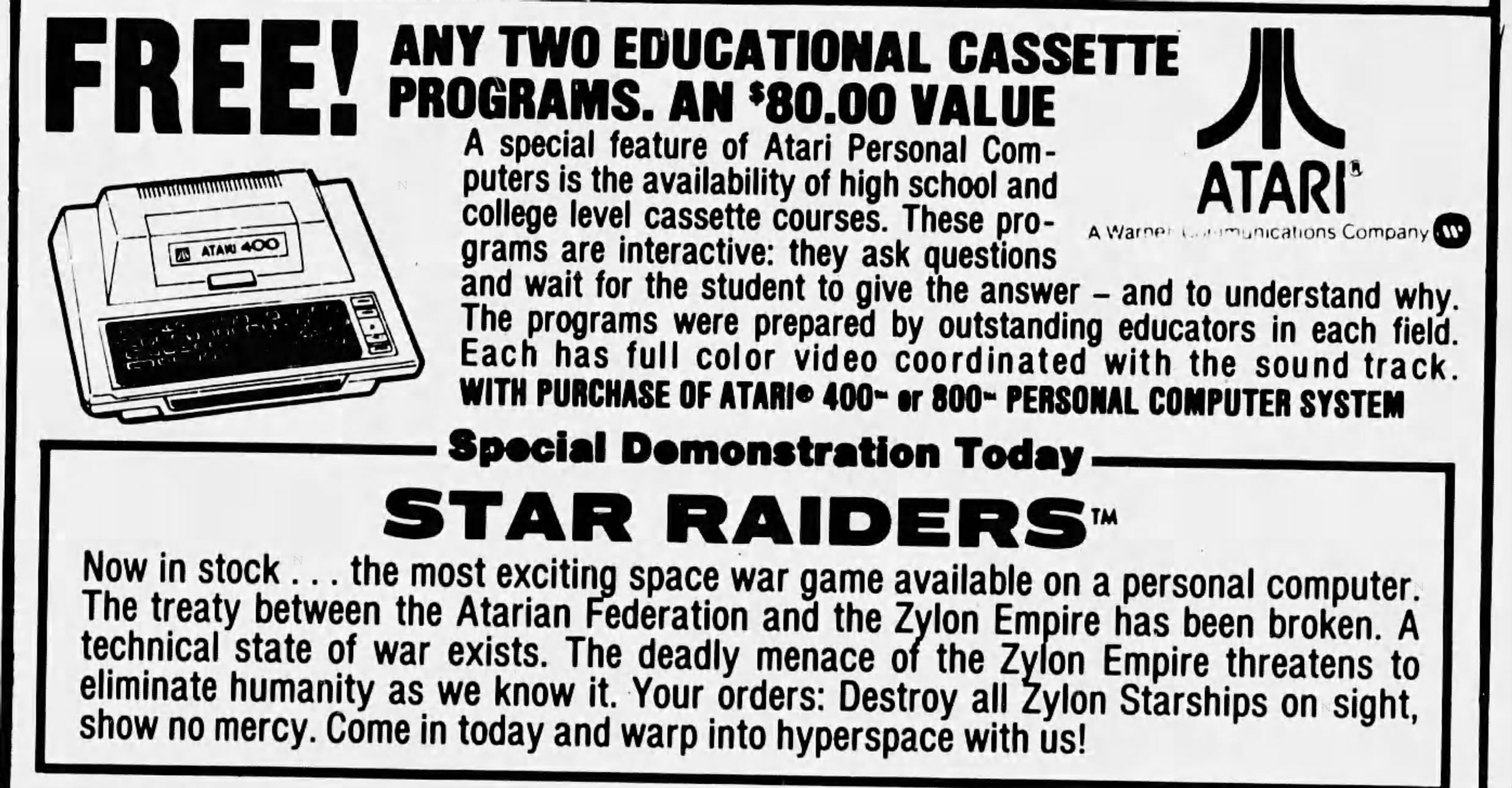
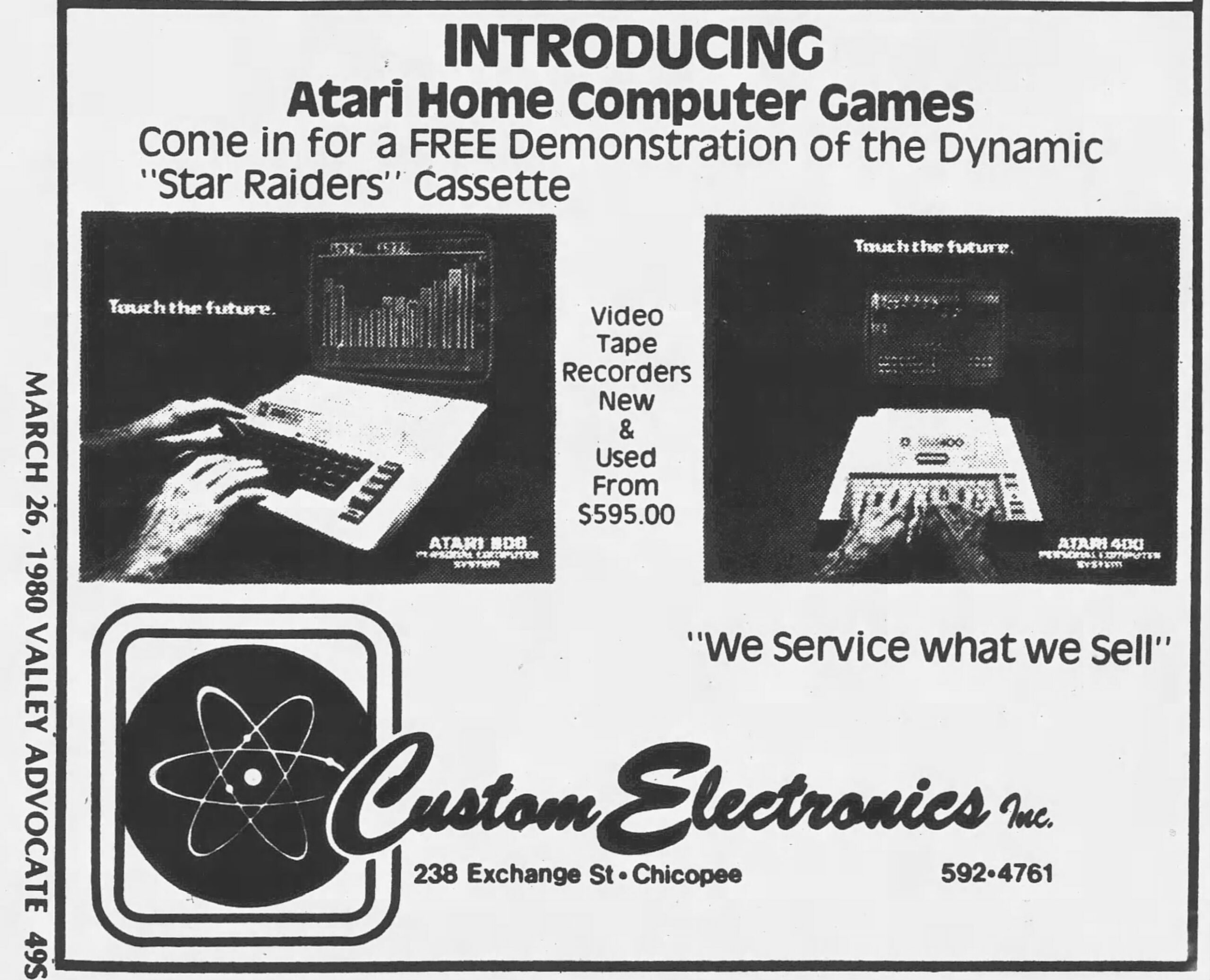
Star Raiders wouldn’t show up on the VCS until 1982, but it was one of the earliest game releases on the Atari computer line, which launched around November 1979 with Star Raiders showing up at some point between then and April 1980. An absolute technical showcase, Star Raiders put players in the cockpit of a star ship that, like in Star Trek, was searching sectors of a galaxy map looking for enemy ships while balancing energy supplies and protecting friendly starbases. Developer Doug Neubauer had indicated that making a real-time, action-oriented version of Star Trek had been his intention with this game, and visually it’s also pulling from other franchises such as Star Wars and Battlestar Galactica. Star Raiders saw its own share of praise, copycats, and spiritual successors: from VCS games like Starmaster and Phaser Patrol to highly influential computer games like Elite, X-Wing and Wing Commander. There was nothing like Stellar Track on the VCS when it came out in 1981, but folks who had access to an Atari computer had a more exciting option, and in 1982 no less than three clones and one official conversion of Star Raiders would show up on the VCS and really overshadow Stellar Track. The similarity was recognized at the time, too; the January 1983 edition of Electronic Fun with Computers & Games refers to Stellar Track as essentially a board game version of Star Raiders.
Star Raiders and its clones also spelled the beginning of the end for Star Trek as a commercially sold game. Ahl said there were plans at Creative Computing to sell Super Star Trek on all the major computer platforms through their Sensational Software imprint, though these fell through as the computer market rapidly shifted towards more graphically impressive games – he himself noting their top sellers were Air Traffic Controller and versions of Space Invaders and Breakout. This isn’t to say that Star Trek didn’t routinely reappear as commercial computer software, but these typically were more graphically intensive than what you found only a few years earlier. Eschewing the simple, turn-based original, some of these commercial products even pulled in real-time elements from variants like Trek80 without going full-on Star Raiders. Perhaps the most blatant of these is the Famicom Disk System game Pulsar no Hikari, which plays very similarly to Star Trek save for the fact that in-sector movement and combat plays out in active real time. Much as Richard Edwards indicated in Space Gamer, even if Star Trek is fun, it’s hard to put it up against the increasingly elaborate and ambitious games from the 80s and expect it to be a viable commercial product without some changes.
Even though game design moved rapidly beyond Star Trek, it’s clear that the game was an early discovery for quite a few game developers throughout the game industry’s life, meaning its roots run pretty deep in the field today. Leedom said he’d received numerous letters from across the globe for decades after Super Star Trek was first published, in many cases by kids learning about computers and programming, who were asking for advice to convert the game to whatever platform they were running – wherein Leedom would routinely encourage them to experiment with the code and given them suggestions if they had specific questions. It’s hard to really quantify how many games were influenced in some way by Mayfield’s original work on some base level as such, but this continued affection for the game by programmers has meant that Star Trek hasn’t simply vanished. Rather, it continues to be converted to new platforms, each with their own twists on the formula just as in the 70s and 80s.
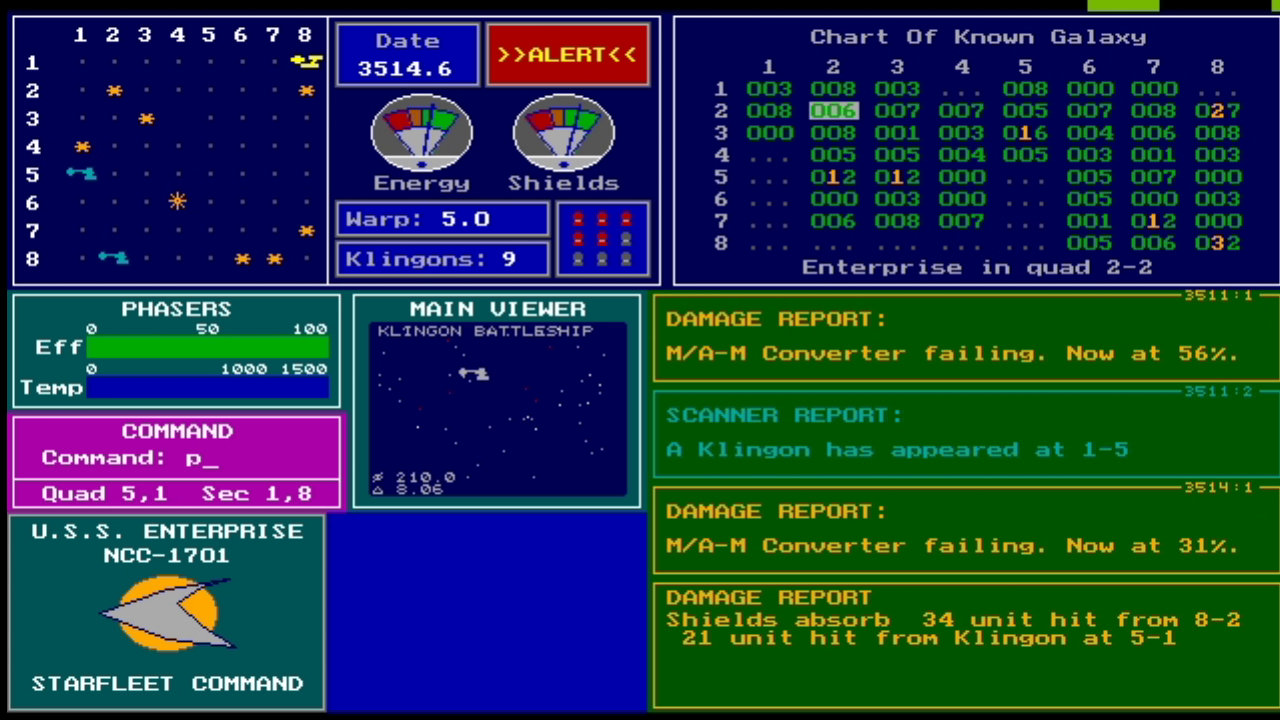
Versions for C and Java have been floating around since the 2000s, and today you can even find it running on iOS or in internet browsers. Mayfield considers it to be one of the most widely converted computer programs ever written, next to the “Hello World” demo, and it’s a tall order to try and track down the evolution of every take on the game. Mayfield even considered revisiting his creation in recent years – he said he thought about entering a game jam based on converting his game to new computer languages using modern tools, thinking that he could do a quickie conversion in a day, but then realized that with all the new audio and visual bells and whistles he could do now, it would have likely taken up a whole summer again. And as this video has shown, Star Trek has gotten around with tweaks designed to take advantage of new technology or to simply cram it into a platform that really has no business running it. Even today, a trawl through itch.io turns up recent editions for both retro and modern PCs and for the PICO-8 fantasy game console.
Star Trek the game has in some ways followed the course of Star Trek the media franchise, which has similarly been rather ubiquitous over the past nigh-60 years (as of this writing) thanks both to officially produced materials and the fan works that have continued to pop up. And while Atari never did get that license, it may have worked out for the best. Stellar Track continues to pop up wherever VCS games are being rereleased without any licensing issues, making it one of the most accessible ways to play Star Trek today. If you’ve got one of these Atari collections that it’s included with, a copy of the original cartridge, or just a hankering to boot up an emulator, give it a whirl. Zdybel’s implementation may not have all the bells and whistles of other variants, but the core game of Star Trek is still a lot of fun all these years later, and his conversion is an approachable way to experience it.
Sources:
Bob Leedom, interview with the author, May 29, 2021
Mike Mayfield, correspondence with the author, April 4, 2021-July 6, 2021
Mike Mayfield, interview with Ethan Johnson, June 3, 2017
Mike Mayfield, interview with the author, January 2, 2026
David Ahl, correspondence with the author, Feb. 10, 2021-April 5, 2021
Rob Zdybel, correspondence with the author, Nov. 23, 2020-July 18, 2021
Ron Stringari, interview with the author, Feb. 17, 2021
An Interview with Doug Neubauer, Analog Computing, Lee Pappas, October 1986
Doug Neubauer, James Hague, dadgum.com
SPACWR, 101 BASIC Computer Games, David Ahl, 1973
Super Star Trek, BASIC Computer Games: Microcomputer Edition, David Ahl, 1978
The Birth of PC Games and Star Trek, Oh! MZ, Junji Minegishi, September 1984 (translated by Brian Clark of onemillionpower.com)
Games People Play, The Carletonian, Jim Wrede, May 20, 1971
The Eat Report, Electronic Fun with Computers & Games, Jens von der Heide, January 1983
The Home Arcades, The Times (Calumet IN), Paul Ivice, Dec. 18 1981
Capsule Reviews: Stellar Track, Space Gamer, Richard Edwards, August 1982
Video Computer System Update, Analog, May/June 1981
Star Trek, Maury Markowitz, gamesoffame.wordpress.com, accessed Oct. 25 2025
Dave Needle’s One-of-a-King Federation Trading Post Game, Keith Smith, allincolorforaquarter.blogspot.com, Sept. 4 2012
The Other Star Trek Game, Bob Alexander, galacticstudios.org, Sept 16 2022
BRIEF: Star Trek (1972?) [Colonel William Luebbert], The Wargaming Scribe, May 13 2025
Release date sources:
Stellar Track (March 1981): Kannapolis Daily Independent, March 4 1981; Owensboro Messenger-Inquirer, March 11 1981; Charlotte Observer, March 5 1981;
Star Raiders (March 1980): Los Angeles Times, March 15 1980; Valley Advocate Springfield, March 26 1980