Since Space Invaders kicked off the 1980 lineup of VCS games, it’s clear that this is the year that the platform as we know it today truly started to take shape. It’s the year that the VCS became a monster commercial success and pulled the home console market out from a small niche and into what would become a billion-dollar industry, but while Space Invaders had a big role in that, so too did the rise of third party publishers.

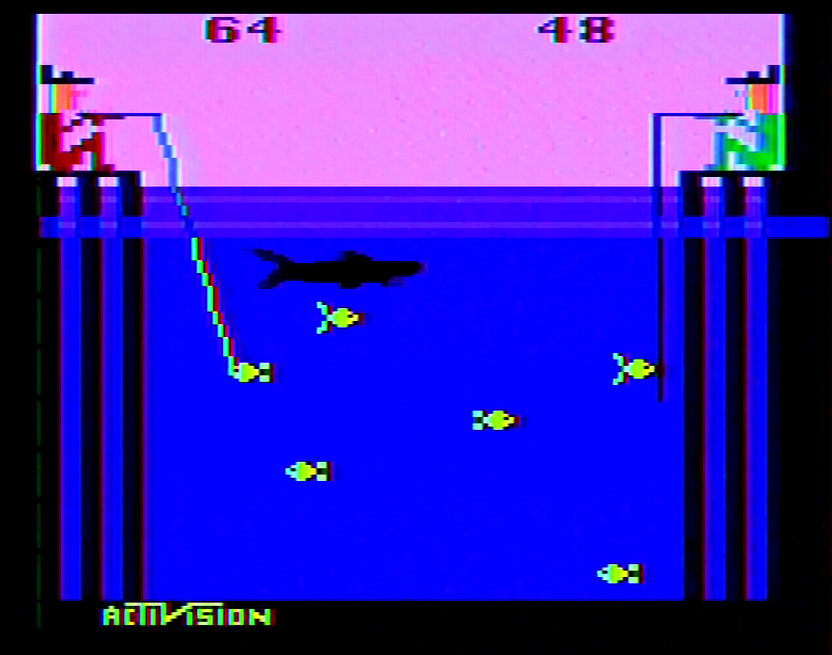
The idea of a “third party,” or a company besides the manufacturer publishing programs, existed in the realm of computers for years at this point. Small publishers had been selling programs for microcomputers such as the Apple II for some time by 1980, and even further back companies like RCA had published programs for IBM minicomputers. You could even make the case that open-source, freely available games and programs that date back to the 1960s were a precursor to the concept of a “third party” publisher popularized in the mid-’70s by companies like Microsoft. But the home video game market was a “walled garden” in the 1970s: the only companies producing games for a platform were the same companies that had made the hardware. If you owned a VCS, you had to choose from Atari’s games. If you bought an MP1000, you were limited to what APF was publishing. The only real exception was Bally’s BASIC cart for the Professional Arcade, which allowed people to write their own programs and make code listings or cassette tapes available for sale, but even this was, by 1980, primarily a hobbyist pursuit and quite niche. But in July of that year, the company Activision published its first four games for a game console they didn’t make or own: Fishing Derby, Boxing, Dragster, and Checkers. In the process Activision set the game industry down a path where today third party publishers and developers make up the vast majority of what’s out there.
Continue reading “Fishing Derby – August 1980”


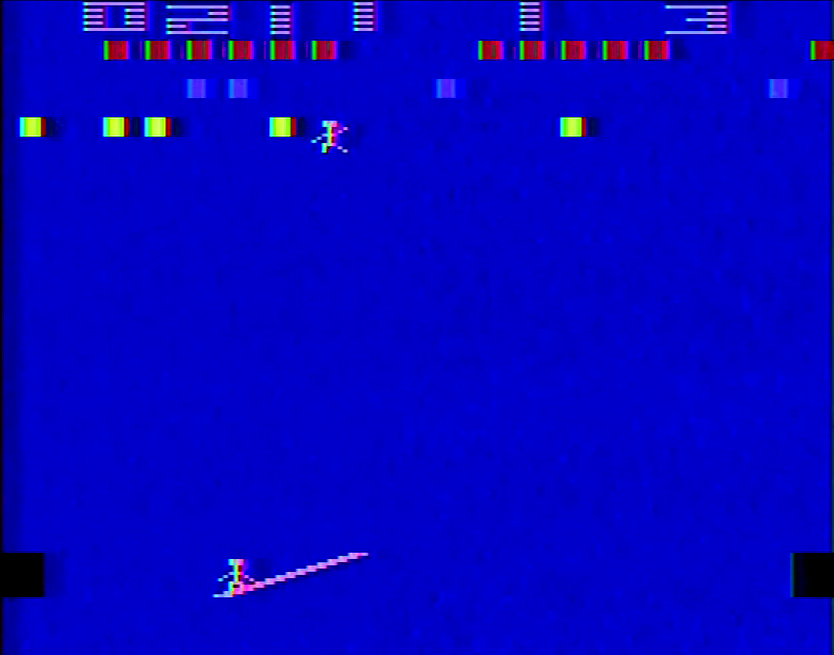
Atari’s fourth and final game from July 1980 follows in the footsteps of games like Night Driver, Outlaw, Indy 500 and numerous others in being a home conversion of a 1970s arcade game that is much, much better known today by its VCS counterpart. And much like Outlaw before it, Circus Atari – or the much more direct Sears title, Circus – is an unlicensed version of another company’s original; in this case it’s Exidy’s 1977 arcade game simply named Circus.

Continue reading “Circus Atari (Circus) – July 1980”

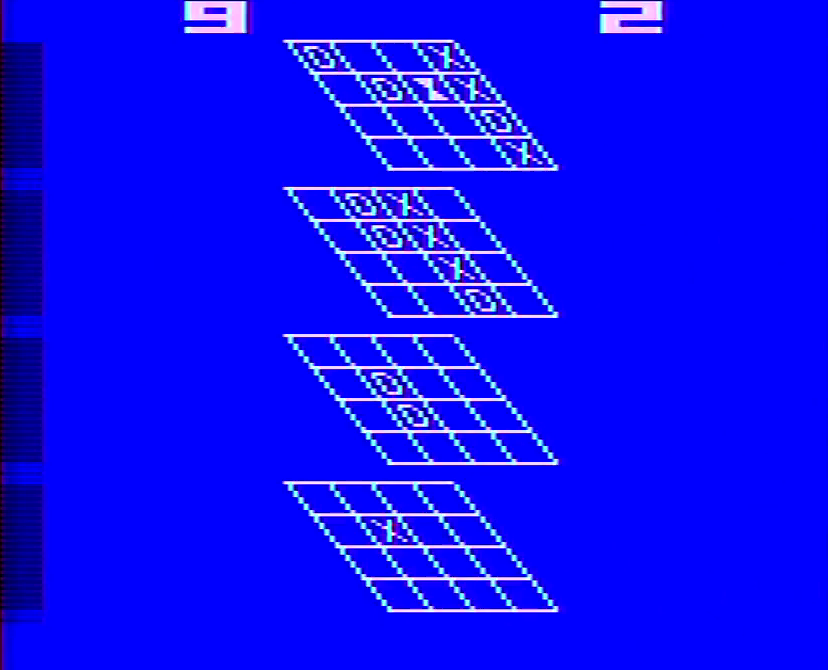
3-D Tic-Tac-Toe, by Carol Shaw – yes, the same Carol Shaw who would write seminal classic River Raid – is in some ways the most ambitious of the four games Atari published in July 1980 – a group that includes Night Driver, Golf, and Circus Atari – though it certainly doesn’t seem like it at first glance. 

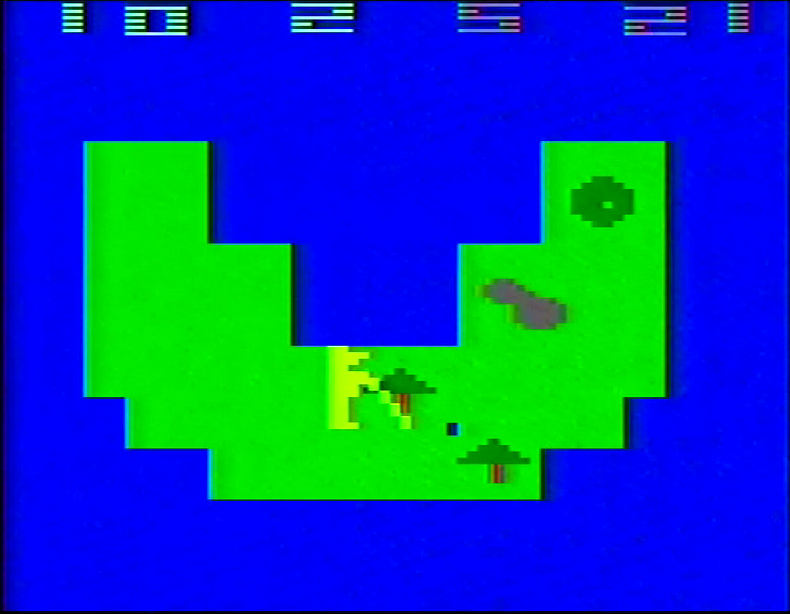
It’s been over a year, but Atari has returned to the world of sports with the company’s take on plain old, windmill-free golf. You may recall that the company had published a version of Miniature Golf in March of 1979 seemingly based on an unreleased arcade game. Golf, based on the regular version of the sport, is substantially different in just about every aspect, and feels like a better realized, more functional game all around… just not one that necessarily moves the video golf genre forward a whole lot owing to its console-oriented origins.

Continue reading “Golf – July 1980”

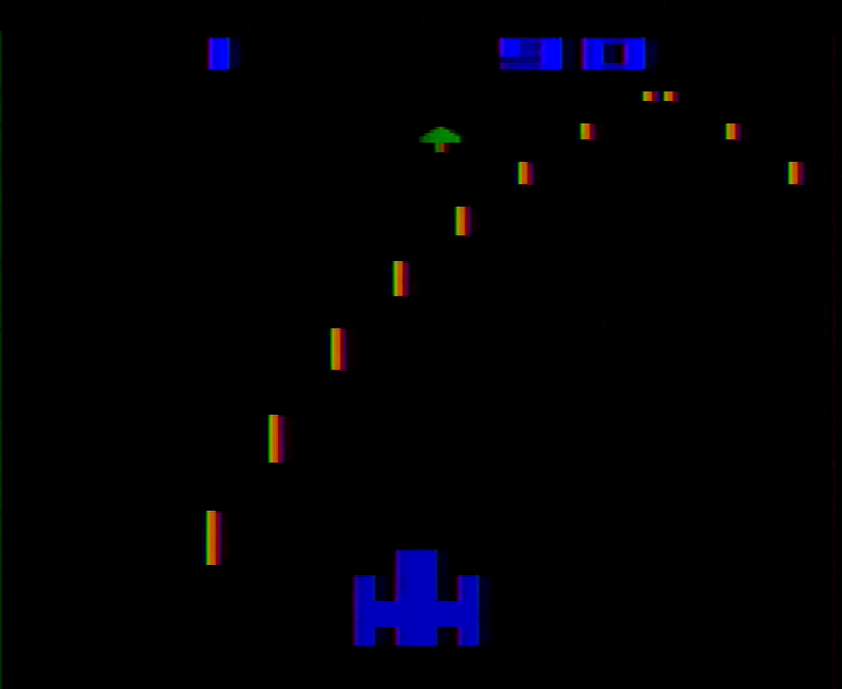
These days, nearly every racing game published is designed around the player’s viewpoint being either behind the car or in the driver’s seat itself. While Night Driver did not originate this perspective, it without question popularized it both in arcades and in Atari’s home conversion.

Yes, Night Driver is a return to the realm of first-party arcade conversions for Atari – something not seen since March 1979’s Canyon Bomber and Sky Diver ports. The VCS version is based off of the October 1976 arcade game of the same name, then nearly four years old by this point. But the technical marvel that was arcade Night Driver and its fast paced, first-person perspective is no less impressive in the scaled down VCS port, as a machine designed to play versions of Tank and Pong is once again pushed to new ground.  But that same arcade game has something of a sordid history, as Atari and two of its arcade competitors practically lifted it wholesale from a German arcade game, Nürburgring 1.

Continue reading “Night Driver – July 1980”

Warren Robinett’s BASIC Programming may be the oddest fit for the VCS out of any cartridge released on the platform – certainly it’s the oddest first party release. It’s not really a game in any sense of the word; rather, it’s a version of the BASIC computer language designed to run on the VCS. I’ll preface this by noting that I am not a programmer and haven’t really written any code since high school aside from type-in programs, but that degree of familiarity is what this cartridge expects out of its audience.

Continue reading “BASIC Programming – April 1980”

Of all the original games Atari put out for the VCS, Adventure may be the one that most people are familiar with today. Warren Robinett’s third and final VCS game – though seemingly the second to actually be released – serves as a counterweight to the arcade action of its March 1980 brethren Space Invaders by providing a nearly unique experience on a home console in its day.


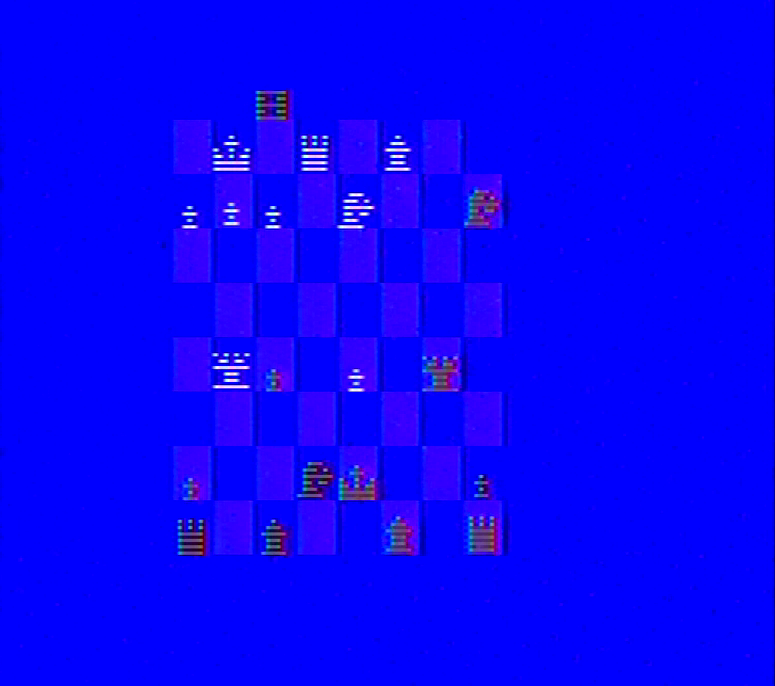
The final VCS game from the 1970s was a long time coming. Video Chess is a technical feat in several ways, and it’s also a game that owes its existence in part to a marketing decision dating back to the VCS launch back in 1977, and to the joint efforts of one of the original software developers on the platform and one of the company’s star programmers making it a reality.

Continue reading “Video Chess – November 1979”

While not nearly as obviously exciting as Superman, the last two VCS games to come out in 1979 push boundaries in their own technical ways. Backgammon and Video Chess are both attempts to bring their respective strategy board games to a platform not suited for the necessary thought processes or even displaying the game boards. Up to this point bringing these types of games to the platform hadn’t really been attempted – the closest is Codebreaker, but that doesn’t have nearly the level of variables as these two and is a much simpler game to display. Both Backgammon and Video Chess have intertwined development histories, but for my purposes, we’ll be talking about them separately.


We’ve come to the first of three VCS games published in the fall of 1979, and it’s a doozy. Superman is an incredibly ambitious game completely unlike anything seen up to this point on the VCS or its competitors; indeed, it’s an experience more in line with the games one would find specially made for computers. And what’s more, Superman absolutely succeeds in these ambitions: it’s a multiscreen adventure with a story, distinct goals the player has to achieve before they can reach an actual win state, and a conclusion to the tale and the game.

Continue reading “Superman – September 1979”