When you think of video game pioneers, you most likely first think of companies like Atari, Taito, Midway, or Namco; or people such as Nolan Bushnell, Shigeru Miyamoto, or Space Invaders’ Tomohiro Nishikado. Your mind probably does not go to engineer Joe Weisbecker or his employer, the American consumer electronics behemoth RCA. And yet, through the efforts of Weisbecker and his coworkers, in the early 1970s RCA was on the bleeding edge of microprocessor, home computer and video game technology. Weisbecker’s work led to the creation of the 1801 and 1802, the world’s first microprocessors based around CMOS technology, the latter of which was used in RCA’s sole released home game console, the Studio II.
Continue reading “The Missing Link: Preserving RCA’s Intermediary Step Between Arcade Video Games and Home Consoles” →

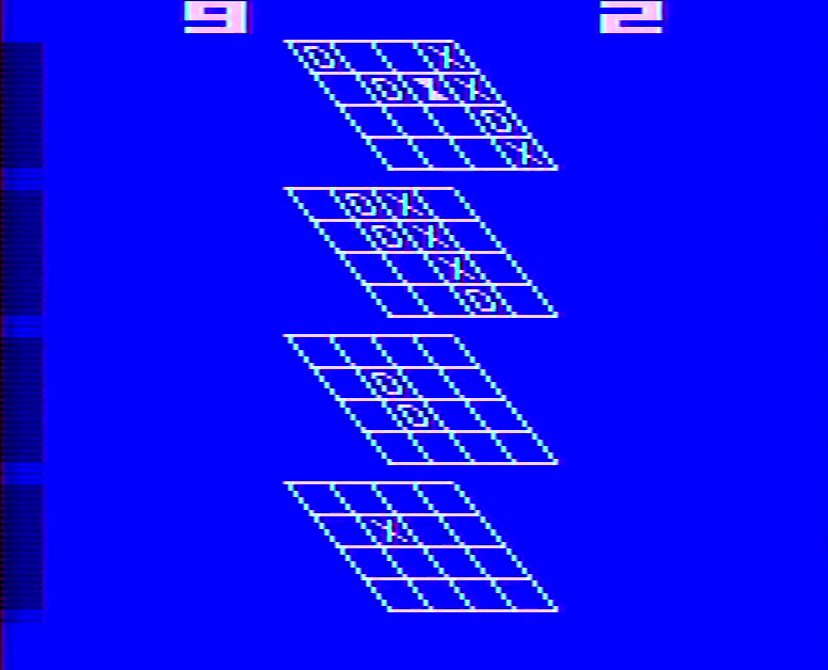
3-D Tic-Tac-Toe, by Carol Shaw – yes, the same Carol Shaw who would write seminal classic River Raid – is in some ways the most ambitious of the four games Atari published in July 1980 – a group that includes Night Driver, Golf, and Circus Atari – though it certainly doesn’t seem like it at first glance. 

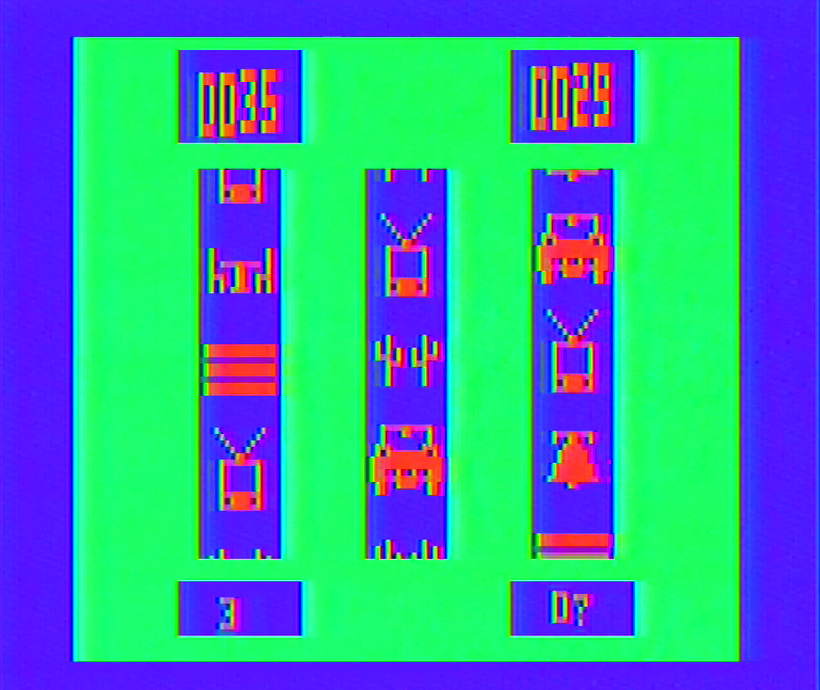
Here we are with the third and final gambling game to be published on the VCS during its commercial life. Unlike Blackjack and Casino, Slot Machine trades in card games in favor of a simulation of, as the name suggests, a slot machine. In this respect it succeeds in producing a perfectly accurate take on slots, but there’s not a whole lot else to it.

Continue reading “Slot Machine (Slots) – March 1979” →


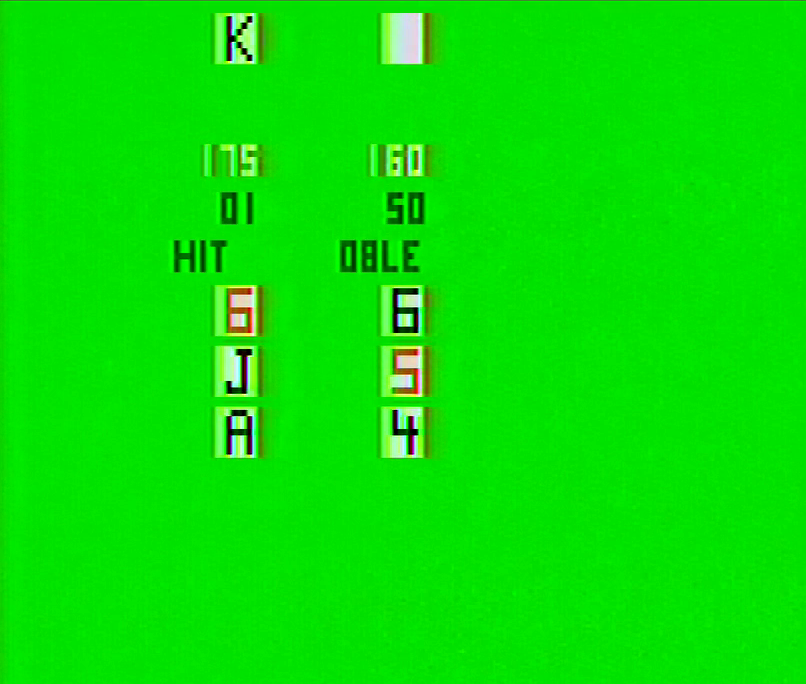
From early on, video games have been translating the games people play in the physical realm to the digital. Sometimes this manifests as a sport, like racing cars, but it can also take the shape of something you might play in everyday life. One of the earliest computer games was a 1954 computer conversion of blackjack done on an IBM-701 by Los Alamos engineers to break down the best ways to play the game, and it would prove to be a popular target for computer programs in the 1960s and 70s, with early renditions such as David Frailey’s September 1967 version for DEC’s PDP computer line, and another written in BASIC that was included in David Ahl’s seminal book, 101 BASIC Computer Games.  With this kind of background, it’s not terribly surprising that the card game was routinely among the earliest releases on the first programmable consoles, either.

Continue reading “Blackjack – September 1977” →